Week One of the Get an Understanding Patient Safety Series
It is always important to get an understanding about anything that affects your life and your health.

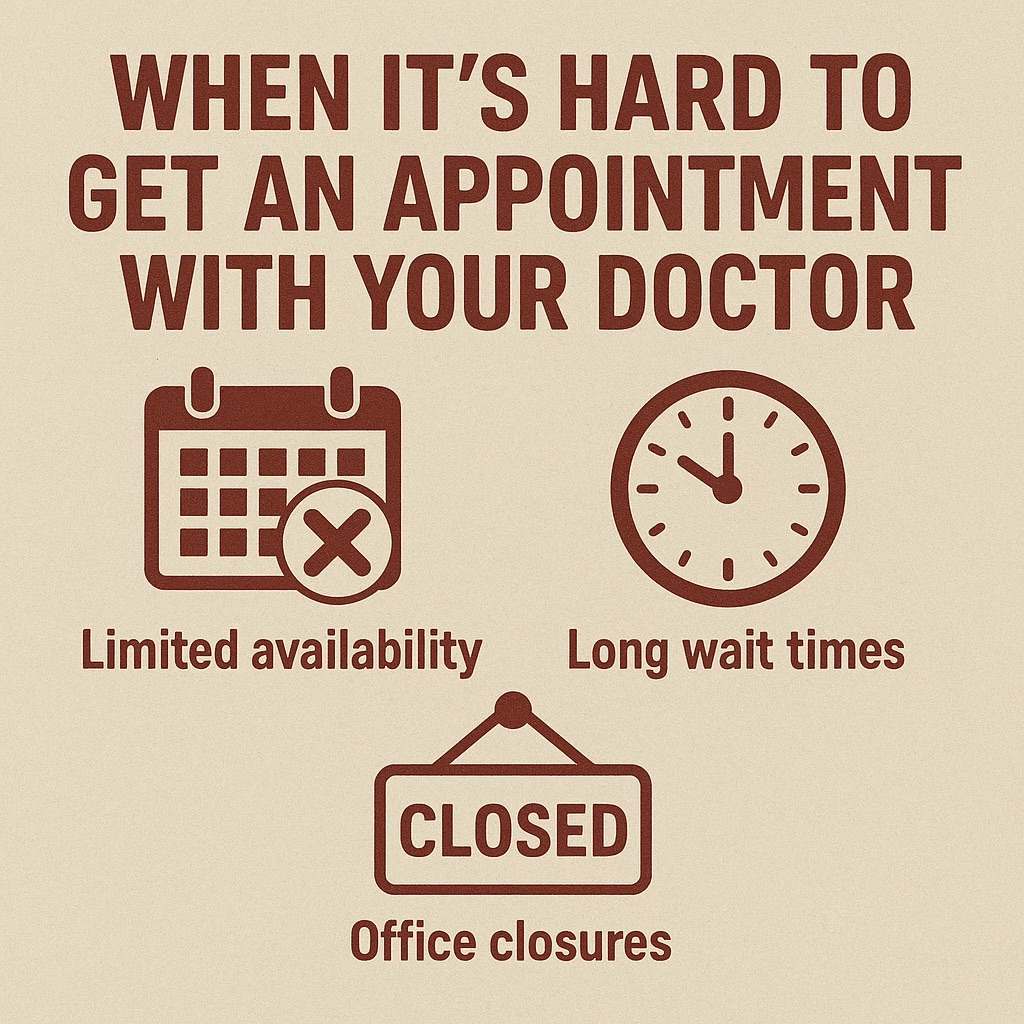
You know that you need to see a doctor. You call the office, explain the reason for your visit, and hear that the next available appointment is several weeks—or even several months—away.
You try another office, but the provider is not accepting new patients. Another practice accepts your insurance but requires a referral. The referral was submitted, but the specialist says it was never received. You call your insurance company, receive another list of providers, and discover that several of the names are outdated or unavailable.
By the time an appointment is finally scheduled, your symptoms may have continued, worsened, or become more difficult to manage.
Difficulty obtaining an appointment is not always a minor inconvenience. It can become a patient-safety concern when it delays evaluation, diagnosis, treatment, medication monitoring, preventive screening, prenatal or postpartum care, or follow-up after hospitalization.
This Is a Real Healthcare Access Problem
A national CDC analysis found that, in 2022, 10.6% of U.S. adults delayed or did not receive medical care because an appointment was not available when they needed it. The same report found that people also experienced barriers because offices were not open when they could attend, providers did not accept their insurance, or the distance to care was too great.
Provider availability is also uneven across the country. As of June 30, 2026, the Health Resources and Services Administration identified 9,003 primary-care Health Professional Shortage Area designations, covering more than 108 million people. HRSA estimated that more than 18,500 additional practitioners would be needed to remove those shortage designations.
These figures do not mean that every person in a designated area is completely unable to receive care. They do show that appointment problems often reflect broader workforce and healthcare-access challenges—not simply a patient’s failure to “try hard enough.”
Why Can Getting an Appointment Be So Difficult?

There is no single explanation. Several barriers may be operating at the same time.
Provider shortages
Some communities do not have enough primary-care physicians, obstetric providers, mental-health professionals, specialists, or other clinicians to meet demand.
A city may contain several major hospitals and still have neighborhoods where residents struggle to find a provider who is accepting new patients. Rural communities may have even fewer options and require patients to travel long distances for specialty, maternity, cancer, or kidney care.
Providers may not be accepting new patients
A practice may appear in an insurance directory but have a closed patient panel. Other offices may accept new patients only at certain times or may have long waiting lists.
Insurance-network problems
A provider may accept one plan offered by an insurance company but not another plan with a similar name. Patients may also encounter inaccurate directories, changing networks, referral requirements, or uncertainty about whether a particular service will be covered.
CMS has recognized the importance of accurate directories and timely appointments. Its Medicaid and CHIP managed-care access rule established appointment-wait standards and requires independent reviews of provider-directory accuracy and appointment availability as those requirements are implemented.
Referral and authorization delays
A primary-care provider may submit a referral, but the specialist may not receive the necessary records. The insurance plan may require prior authorization, additional documentation, or use of a different provider.
Meanwhile, the patient may believe the appointment is moving forward when no one is actively processing it.
Limited scheduling options
An office may operate during the same hours that patients work, attend school, care for children, or provide care to family members. Some people cannot repeatedly take unpaid time away from work or remain on hold during business hours.
Transportation and geographic barriers
Even when an appointment is available, the location may be difficult to reach. Transportation, travel time, disability access, parking, childcare, and public-transit schedules can all determine whether a person can realistically attend.
Demand for certain specialists
Some specialties receive more referrals than their available appointment capacity can handle. A shortage may be especially noticeable in behavioral health, neurology, rheumatology, dermatology, cardiology, high-risk obstetrics, oncology, nephrology, and other areas requiring specialized care.
When Does an Appointment Delay Become a Patient-Safety Concern?
Not every delayed appointment causes harm. However, the risk increases when a delay affects:
- New or worsening symptoms
- Abnormal laboratory or imaging results
- Follow-up after an emergency-room visit or hospitalization
- Medication monitoring or refills
- Prenatal or postpartum care
- Cancer screening or evaluation of a possible cancer symptom
- Chronic kidney disease monitoring
- Mental-health or substance-use treatment
- Specialist referrals marked urgent
- A recommended procedure or diagnostic test
- Symptoms that could represent infection, cardiovascular disease, a neurological problem, or another time-sensitive condition
Access barriers can delay treatment and preventive care and contribute to poorer outcomes.
The patient should not be expected to determine the seriousness of every symptom alone. Healthcare systems need reliable processes for recognizing when someone requires clinical review rather than placement into the next routine opening.
Questions to Ask When the Next Appointment Is Too Far Away
When speaking with the scheduler, remain respectful but be clear about what you need.
Consider asking:
“Can you place me on the cancellation list?”
Cancellation lists can sometimes provide an earlier appointment, especially when the patient can respond quickly.
“Can a nurse or other clinical team member review my symptoms?”
A scheduler may not be qualified to determine urgency. Requesting clinical review can help the office decide whether you need an earlier appointment, another level of care, or instructions while you wait.
“Is another provider in the practice available sooner?”
You may not need to wait for one particular physician if a qualified nurse practitioner, physician assistant, covering physician, or another appropriate clinician has availability.
“Is a telehealth appointment appropriate?”
Telehealth will not work for every condition, but it may allow an initial assessment, medication discussion, review of results, or determination of whether an in-person examination is needed.
“Is there another location within the same health system?”
A nearby office may have earlier availability even when your usual location does not.
“Did you receive my referral, records, test results, and authorization?”
Do not assume that every document reached the correct office. Ask what was received, what remains missing, and who is responsible for sending it.
“What should I do if my symptoms change while I am waiting?”
Ask for specific escalation instructions. Find out whom to call, what symptoms require urgent attention, and whether the office has an after-hours line.
“Can you document that I requested an earlier appointment?”
This can help create a clear record of your effort to obtain timely care.
Call Your Health Plan When the Network Is Not Working
When every listed provider is unavailable, not accepting patients, or unable to offer an appropriate appointment, contact the insurance plan.
Ask the representative to:
- Confirm which providers are currently accepting new patients
- Help locate an available in-network provider
- Explain referral or authorization requirements
- Provide a case or reference number for the call
- Explain the plan’s appointment-access process
- Consider an out-of-network exception when an appropriate in-network provider is unavailable
- Assign a care coordinator or case manager when available
Write down the representative’s name, the date and time, the telephone number called, and what you were told.
Create a Simple Appointment-Access Record
Patients should not need to become professional investigators to receive care. Still, a brief written record can help when several offices, referrals, and insurance representatives are involved.
Record:
- The date you requested the appointment
- The reason for the visit
- The appointment offered
- Whether you asked for clinical review
- The offices contacted
- Referral and authorization status
- Insurance reference numbers
- Changes in your symptoms
- Instructions you received
This is not about preparing for a dispute. It is about preventing information from becoming lost while multiple people handle your care.
Do Not Wait for a Routine Appointment During an Emergency
A routine office appointment is not the appropriate route for severe or rapidly worsening symptoms.
Call 911 or seek emergency evaluation when you believe you may be experiencing an emergency. Examples can include severe trouble breathing, signs of stroke, intense chest pain, heavy uncontrolled bleeding, loss of consciousness, or other serious symptoms.
Under EMTALA, most hospital emergency departments must provide an appropriate medical screening examination and stabilizing treatment for an emergency medical condition regardless of insurance status or ability to pay.
What Healthcare Organizations Can Do Better
Patients should not carry the entire burden of solving appointment-access failures.
Healthcare organizations should consider:
- Clinical escalation pathways for concerning symptoms
- Accurate provider directories and scheduling information
- Cancellation and same-day appointment systems
- Extended or flexible office hours
- Telehealth when clinically appropriate
- Tracking referral completion rather than merely sending referrals
- Closing the loop on abnormal results
- Scheduling important follow-up before hospital discharge
- Monitoring how long patients wait by service and urgency
- Identifying differences in access by geography, insurance, language, disability, race, ethnicity, and other relevant factors
- Giving patients clear instructions about what to do while waiting
- Ensuring that schedulers can quickly reach clinical staff when a patient reports concerning symptoms
An unavailable appointment should not become a dead end.
A Positive Practice Worth Recognizing
Some offices handle access problems very well.
Patients value practices that:
- Listen carefully to the reason for the appointment
- Arrange nurse triage when symptoms may be urgent
- Offer cancellation openings
- Provide another qualified clinician when appropriate
- Confirm receipt of referrals and records
- explain delays honestly
- Give clear escalation instructions
- Follow up when an earlier appointment becomes available
These practices demonstrate respect and can reduce the risk that a patient’s condition will worsen unnoticed.
Sunflower Takeaway
When you cannot obtain a timely healthcare appointment, do not simply assume there is nothing else you can do.
Ask whether your symptoms can be reviewed by a clinician. Request a cancellation opening. Confirm that referrals and records were received. Contact your health plan when its network is not providing meaningful access. Keep a simple record of your efforts, and seek urgent evaluation when symptoms cannot safely wait.
Most importantly, continue asking questions until you understand the next step.
It is always important to get an understanding about anything that affects your life and your health.
Join the Conversation
Have you experienced difficulty obtaining an appointment? What helped you finally receive care? What did a healthcare office do well—or what could have been handled better?
Follow and subscribe to The Sunflower Advocate as we continue discussing patient safety, healthcare access, and high-profile healthcare cases.
Subscribe. Follow. Share with someone you love.
From time to time, selected subscribers, followers, and engaged community members may also receive a beautiful Sunflower Surprise as a way of showing appreciation for learning, listening, and participating in the conversation.
