Patient Safety Doesn’t End at Discharge: Why Awareness, Follow-Up, and Advocacy Matter More Than Ever
By Joydrop Baby & Wellness
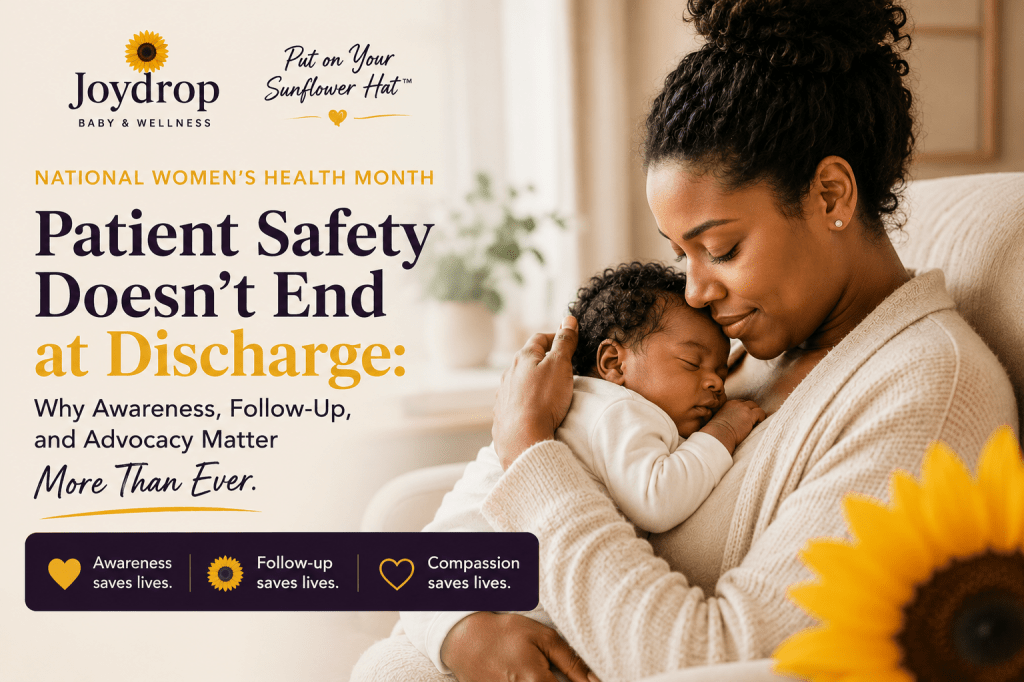
Every year during National Women’s Health Month, we talk about prevention, screenings, nutrition, and access to care and all of those conversations matter.
But there’s another conversation we urgently need to have:
What happens after a woman leaves the hospital.
Because too often, that’s where the most vulnerable part of her journey begins.
As someone who has spent years studying patient safety, healthcare systems, and medical malpractice cases, one pattern continues to appear over and over again:
The warning signs were there.
The risk factors were there.
But the follow-through failed.
And in maternal health, that failure can become life-threatening very quickly.
The First Prenatal Visit Matters
One of the most important moments in pregnancy often happens at the very beginning.
At a woman’s first prenatal appointment:
- blood pressure is checked,
- labs are drawn,
- medical history is reviewed,
- and important baseline information is gathered.
These early assessments can help identify risk factors for:
- hypertension,
- cardiovascular complications,
- diabetes,
- and other chronic conditions that may affect pregnancy outcomes.
But identifying risk is only one part of the equation.
The real question becomes:
What happens next?
Because awareness without ongoing monitoring, education, and support does not prevent complications.
Cardiovascular Disease and Maternal Health
Many people are surprised to learn that cardiovascular disease remains one of the leading causes of maternal death.
What makes this especially dangerous is that symptoms do not always appear dramatic at first.
Sometimes it begins with:
- a headache that will not go away,
- swelling,
- fatigue,
- chest discomfort,
- or shortness of breath.
And too often, women are left wondering:
“Is this normal… or should I be concerned?”
That uncertainty can become deadly when warning signs are dismissed, misunderstood, or not followed up on quickly enough.
Why the First 48–72 Hours After Discharge Matter
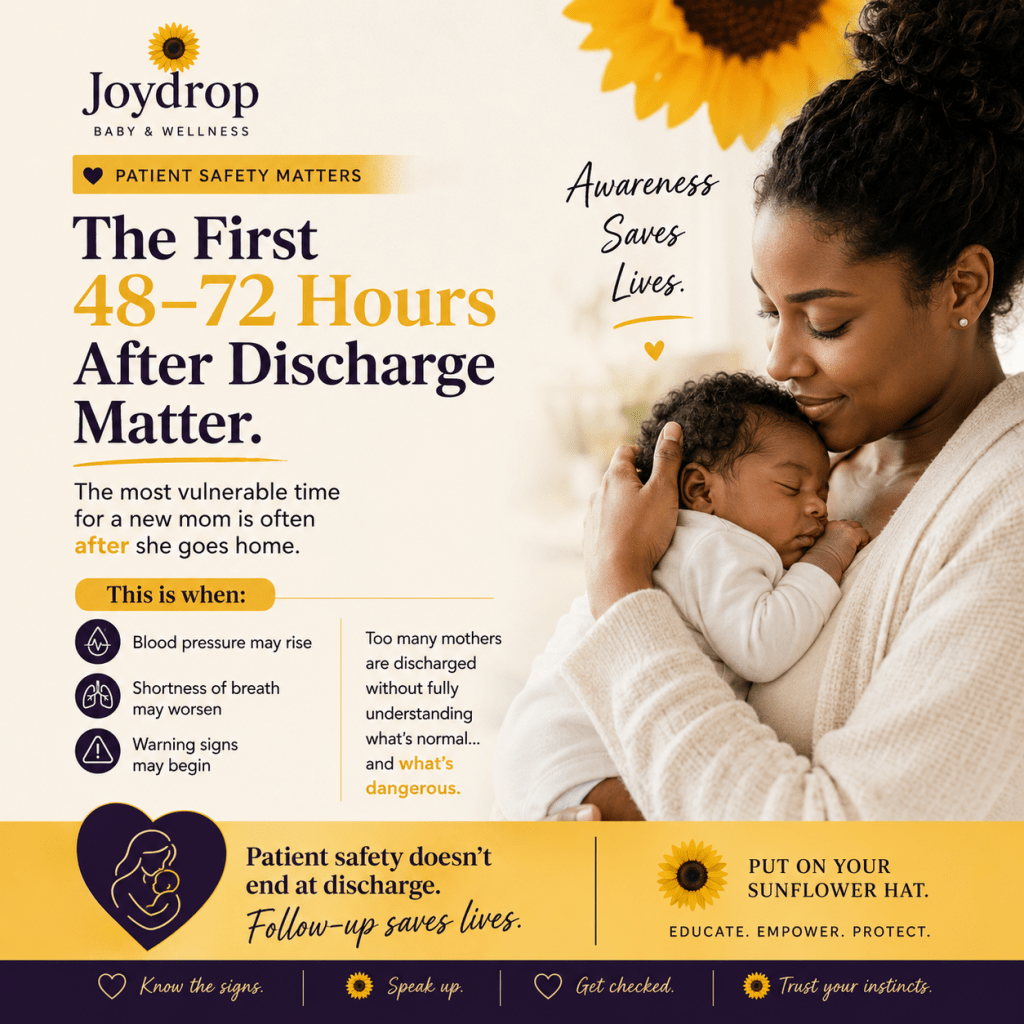
One of the most overlooked windows in maternal healthcare is the first 48–72 hours after a new mother leaves the hospital.
This is often when:
- blood pressure may rise,
- symptoms become more noticeable,
- exhaustion intensifies,
- and complications can begin developing rapidly.
Yet many women leave the hospital overwhelmed, exhausted, and without fully understanding what warning signs require immediate attention.
Patient safety should never end at discharge.
Mothers deserve:
- clear education,
- compassionate follow-up,
- support systems,
- and opportunities to speak up when something does not feel right.
When Patient Safety Fails
My background in legal research and patient safety has shown me something difficult but important:
Many medical malpractice cases begin long before a courtroom is ever involved.
They often begin with:
- missed warning signs,
- communication breakdowns,
- inadequate follow-up,
- or systems that fail to stay connected to patients during vulnerable moments.
By the time a family is seeking legal answers, the opportunity for prevention may already be gone.
That is why advocacy matters.
That is why awareness matters.
And that is why healthcare systems must continue working toward stronger continuity of care, improved education, and safer post-discharge support.
Awareness Is Protection
At Joydrop Baby & Wellness, we believe maternal health advocacy is about more than awareness campaigns.
It is about:
- helping women feel informed,
- helping families feel supported,
- encouraging preventive care,
- and creating conversations that could save lives.
Because every mother deserves:
- to feel heard,
- to feel safe,
- and to come home healthy.
This National Women’s Health Month, let’s continue advocating for:
- stronger patient safety,
- better maternal outcomes,
- improved postpartum education,
- and healthcare systems that do not stop caring once a patient leaves the hospital.
Put on Your Sunflower Hat™
Awareness saves lives.
Follow-up saves lives.
Compassion saves lives.

